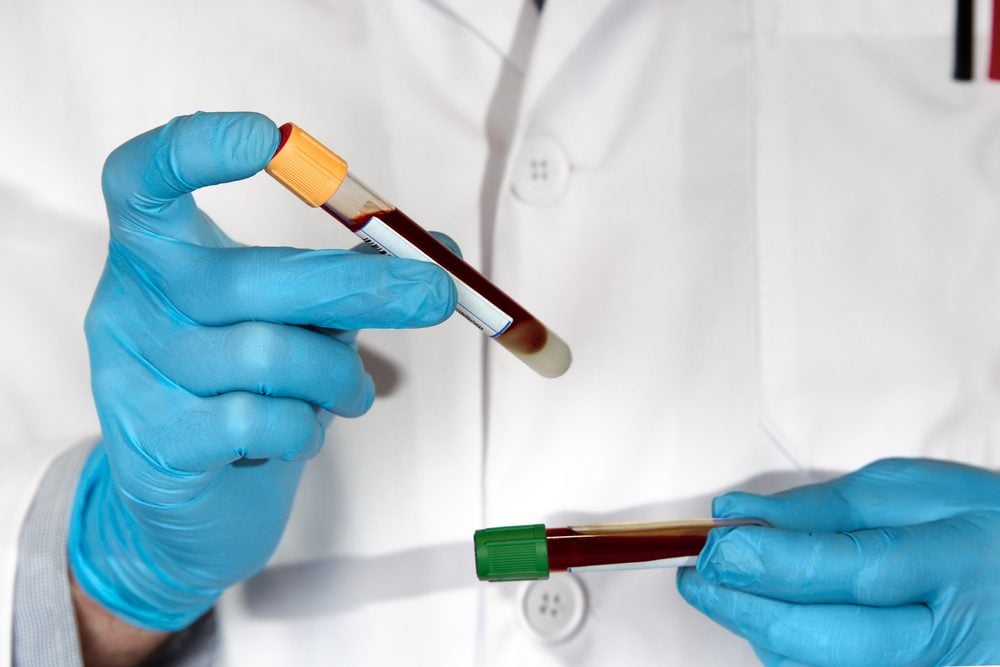
Until recently there was only one multi-cancer blood test most people had heard of. Galleri, from GRAIL, launched in 2021 and spent several years as the only widely available option of its kind. In September 2025, Exact Sciences introduced Cancerguard, and for the first time patients had a genuine choice to make.
That choice comes up in our conversations almost weekly now. People arrive having read about both, unsure how they differ, and often unsure whether either one covers what they were hoping it would. The two tests are more similar than they are different, but the differences that do exist are the ones worth understanding before you spend anything.
This comparison sticks to what each company says its own test does, and to what has been published. Neither test is better in some general sense. They are built on different design choices, and those choices lead to different trade-offs.
What each test is
Cancerguard is a laboratory-developed test from Exact Sciences that looks for cancer signals in a blood sample. Its distinguishing feature is that it analyzes several different classes of biomarker rather than relying on one — the company describes it as the first commercially available multi-cancer test to take that approach. It reports a straightforward result: a cancer signal was detected, or it was not. We cover it in more depth in our guide to what the Cancerguard test is.
Galleri is a laboratory-developed test from GRAIL, and it works by reading methylation patterns in cell-free DNA. Methylation is the chemical tagging system the body uses to switch genes on and off, and cancer cells carry distinctive patterns. Alongside detecting a signal, Galleri also predicts where in the body that signal is likely coming from — a feature GRAIL calls Cancer Signal Origin.
Both are ordered outside the usual insurance pathway. Both have been studied extensively by their manufacturers. And neither has been approved by the FDA, though GRAIL submitted the final module of its premarket approval application to the agency in January 2026.
Side by side
| Cancerguard (Exact Sciences) | Galleri (GRAIL) | |
|---|---|---|
| Launched | September 2025 | 2021 |
| Regulatory status | Laboratory-developed test; not FDA-approved | Laboratory-developed test; not FDA-approved. Final PMA module submitted to FDA January 2026 |
| Technology | Multiple biomarker classes, including ctDNA methylation | Cell-free DNA methylation patterns |
| Predicts where the signal came from | No | Yes — Cancer Signal Origin, >90% accurate in PATHFINDER 2 |
| Age indication | Adults 50–84 | Adults at elevated risk, “such as age 50 or older” — no stated upper limit |
| Access | Ordered through a telehealth portal | Prescription required |
| Reported sensitivity | 68% across the six deadliest cancers; 64% overall excluding breast and prostate (development studies) | 69.8% episode sensitivity for the 12 cancers causing ~two-thirds of US cancer deaths; 39.3% across all cancers (PATHFINDER 2) |
| Reported specificity | 97.4% (development studies) | 99.6% (PATHFINDER 2) |
| Scope | Signals associated with 50+ cancer types | Signals associated with more than 50 cancer types |
| Stated exclusions | Not indicated for breast cancer screening, prostate cancer screening, or pre-cancerous lesions | Not for use during pregnancy, under age 22, or during active cancer treatment |
| Price | Around $700 (reported $659–$689) | Around $950 |
| Insurance coverage | Not covered by Medicare or commercial insurance | Not covered by Medicare; a limited number of health plans cover it |
How they differ in approach
The clearest technical difference is what each test reads.
Galleri commits fully to methylation. It reads the patterns of chemical tags across cell-free DNA and matches them against a reference library built from tens of thousands of samples. That library is also what allows it to predict tissue of origin, which is a meaningful practical advantage — a positive result that says “this signal likely came from the pancreas” narrows the investigation considerably compared with a positive result that says only “something was found.”
Cancerguard combines methylation with additional biomarker classes. The rationale is that different cancers announce themselves in different ways, and a test looking at more than one type of signal has more chances to notice one. Cancerguard does not report a predicted origin.
The second difference worth noting is the shape of the evidence. Galleri’s headline figures come from PATHFINDER 2, presented at ASCO in 2026, which enrolled 35,878 adults aged 50 and over and tested them prospectively — a screening study in a real population. Cancerguard’s figures come from its development studies, which is a different and generally earlier stage of evidence. That does not make the numbers wrong. It does mean the two sets of figures are not directly interchangeable, and comparing sensitivity percentages across studies with different designs and different populations is not as clean as a table makes it look.
Cost
Galleri is priced at roughly $950. Cancerguard sits around $700, with reported figures between $659 and $689.
Neither is covered by Medicare, and commercial coverage is limited to a small number of plans, so most people pay out of pocket.
Age indication
This is where the two tests diverge in a way that affects who can actually be tested.
Cancerguard is indicated for adults aged 50 to 84 with no cancer diagnosis in the previous three years. That is a closed range with a defined ceiling.
Galleri is framed more loosely — for adults at elevated risk of cancer, “such as age 50 or older.” It requires a prescription, is not intended for use during pregnancy, in people aged 21 or under, or during active cancer treatment, but it carries no stated upper age limit.
For most patients the practical effect is the same: if you are under 50, neither test is designed for you. This is the single most common point of frustration we hear, because interest in early detection is not confined to people over 50. Patients in their thirties and forties, often with a family history behind the question, find that this entire category of testing is currently indicated for a group they have not yet joined.
What neither test covers
Some limitations apply to both, and they are the ones most likely to be missed.
Neither test replaces guideline-based screening. GRAIL states plainly that Galleri is intended to be used in addition to — not instead of — mammography, colonoscopy, PSA testing and cervical screening. Cancerguard goes further and specifies that it is not indicated for breast or prostate cancer screening at all, which is worth pausing on: the American Cancer Society projects 321,910 new breast cancer cases and 333,830 new prostate cancer cases in 2026, out of roughly 2,114,850 total. That is about 31% of US cancer diagnoses sitting outside what Cancerguard is designed to look for.
Neither is FDA-approved. Neither is generally covered by insurance. The US Preventive Services Task Force has not issued a recommendation on multi-cancer blood testing. And no MCED test has yet demonstrated that it reduces cancer deaths — that research is ongoing, and until it reports, nobody can honestly claim a survival benefit for either product.
What a positive result means for both
A detected cancer signal is not a diagnosis from either test. It is the start of an investigation, and in practice that investigation means imaging.
The published experience here is instructive. In PATHFINDER 2, 287 of 35,878 participants had a signal detected — about 0.9% — and 173 cancers were diagnosed within twelve months, giving a positive predictive value of 60.3% and a cancer detection rate of 0.5%. Seventy-one percent of the cancers found were stage I to III. That is a considerably stronger result than the earlier PATHFINDER study published in The Lancet in 2023, where 1.4% of 6,621 participants had a signal detected and positive predictive value was 38% — meaning 62% of positive results were ultimately false positives.
In that earlier study, 92% of people with a detected signal went on to have at least one imaging test: PET-CT in 61% of cases, CT in 39%, MRI in 21%. The median time from a positive result to a definitive answer was 79 days, and for those whose result turned out to be a false alarm, it was 162 days.
The signal raises the question. Imaging is what answers it.
How to decide
If you are choosing between them, a few things are worth weighing.
If knowing the likely source of a signal matters to you, Galleri predicts tissue of origin and Cancerguard does not, and that shortens the diagnostic path. If cost is the deciding factor, Cancerguard is roughly $250 less. If you are over 84, Galleri’s indication does not exclude you and Cancerguard’s does. If you want the test with prospective population-screening data behind it, that is currently Galleri.
And if you are under 50, the more useful conversation is probably not about which blood test to choose, but about what other forms of early detection are available to you now.
That is where imaging tends to enter the picture. Whole-body MRI asks a structural question rather than a chemical one — it produces detailed images of the brain, spine, chest, abdomen and pelvis with no ionizing radiation and no contrast dye, and our board-certified radiologists review them for anything abnormal in size, shape or texture. It is available from age 18, and it establishes a personal baseline that future scans can be compared against.
It is not a substitute for these blood tests, and it has real limits of its own: it is poor at detecting small lung nodules, it does not evaluate the lining of the colon, and a whole-body protocol is not the same study as a dedicated breast or prostate MRI. And there is no published evidence yet that whole-body MRI screening extends life — that research does not exist for any screening MRI protocol or any MCED test. We work through those trade-offs honestly in our guide to cancer blood tests and whole-body MRI.
Whichever direction you go, the value comes from understanding what you are actually buying an answer to. If you would like to talk it through, our medical director Dr. Edward Tavel and our team are happy to help you think it through — no pressure either way.
Frequently asked questions
What is the difference between Cancerguard and Galleri?
Both are multi-cancer blood tests. Galleri reads cell-free DNA methylation patterns and predicts where a signal likely originated. Cancerguard analyzes multiple biomarker classes and does not predict tissue of origin. Galleri costs around $950; Cancerguard around $700.
Which is more accurate, Cancerguard or Galleri?
The figures are not directly comparable because they come from different study designs. Galleri reported 69.8% sensitivity for the 12 cancers causing about two-thirds of US cancer deaths and 99.6% specificity in PATHFINDER 2. Cancerguard reported 68% sensitivity across the six deadliest cancers and 97.4% specificity in development studies.
How much does the Galleri test cost compared with Cancerguard?
Galleri is around $950 and Cancerguard is around $700 (reported at $659 to $689). Neither is covered by Medicare, and commercial insurance coverage is limited.
Can I take either test if I am under 50?
Generally no. Cancerguard is indicated for adults aged 50 to 84. Galleri is indicated for adults at elevated risk, described as age 50 or older, and is not intended for anyone aged 21 or under.
Do these tests replace mammograms or colonoscopies?
No. GRAIL states Galleri is to be used in addition to standard screening, not instead of it. Cancerguard is not indicated for breast or prostate cancer screening at all. Routine screening should continue regardless of the result.
Sources
- Cancerguard™ Clinician Brochure: Test Information for Healthcare Providers — Exact Sciences, 2025
- Frequently Asked Questions (FAQs) for Patients — GRAIL
- Frequently Asked Questions (FAQs) for Providers — GRAIL
- Safety Information — GRAIL
- GRAIL Presents PATHFINDER 2 Results of More Than 35,000 Participants Showing the Galleri® Test Substantially Increased Cancer Detection With Robust Performance and Favorable Safety at 2026 ASCO Annual Meeting — GRAIL, 2026
- Blood-based tests for multicancer early detection (PATHFINDER): a prospective cohort study — The Lancet, 2023
- Cancer statistics, 2026 — CA: A Cancer Journal for Clinicians (American Cancer Society), 2026
- Questions and Answers about Multi-Cancer Detection Tests — National Cancer Institute (Division of Cancer Prevention)
- Multi-Cancer Early Detection Tests: State of the Art and Implications for Radiologists — Radiology (RSNA), 2025
- Whole-body MRI for opportunistic cancer detection in asymptomatic individuals: a systematic review and meta-analysis — European Radiology, 2026