Before we start making our New Year’s resolutions and celebrate a new beginning, the American Cancer Society estimates about 42,340 new cases of liver and intrahepatic bile duct cancer will be diagnosed in the United States this year, and about 30,980 people will die from them.
Liver cancer is a life-threatening disease that begins in the large internal organ located under your right ribs, known as the liver. Despite ongoing research into the causes of liver cancer and early detection methods, it still holds the title of being one of the leading causes of cancer deaths worldwide, accounting for approximately 760,000 deaths worldwide in 2022, 7.8 percent of all cancer deaths and the third leading cause of cancer death globally.
But not all hope is lost.
October represents Liver Cancer Awareness Month, a time to shed light on the symptoms and risk factors associated with this condition, as well as how the latest technological advancements in healthcare may be the key to early detection and a better future.
Breaking Down the Basics: Your Liver and Liver Cancer
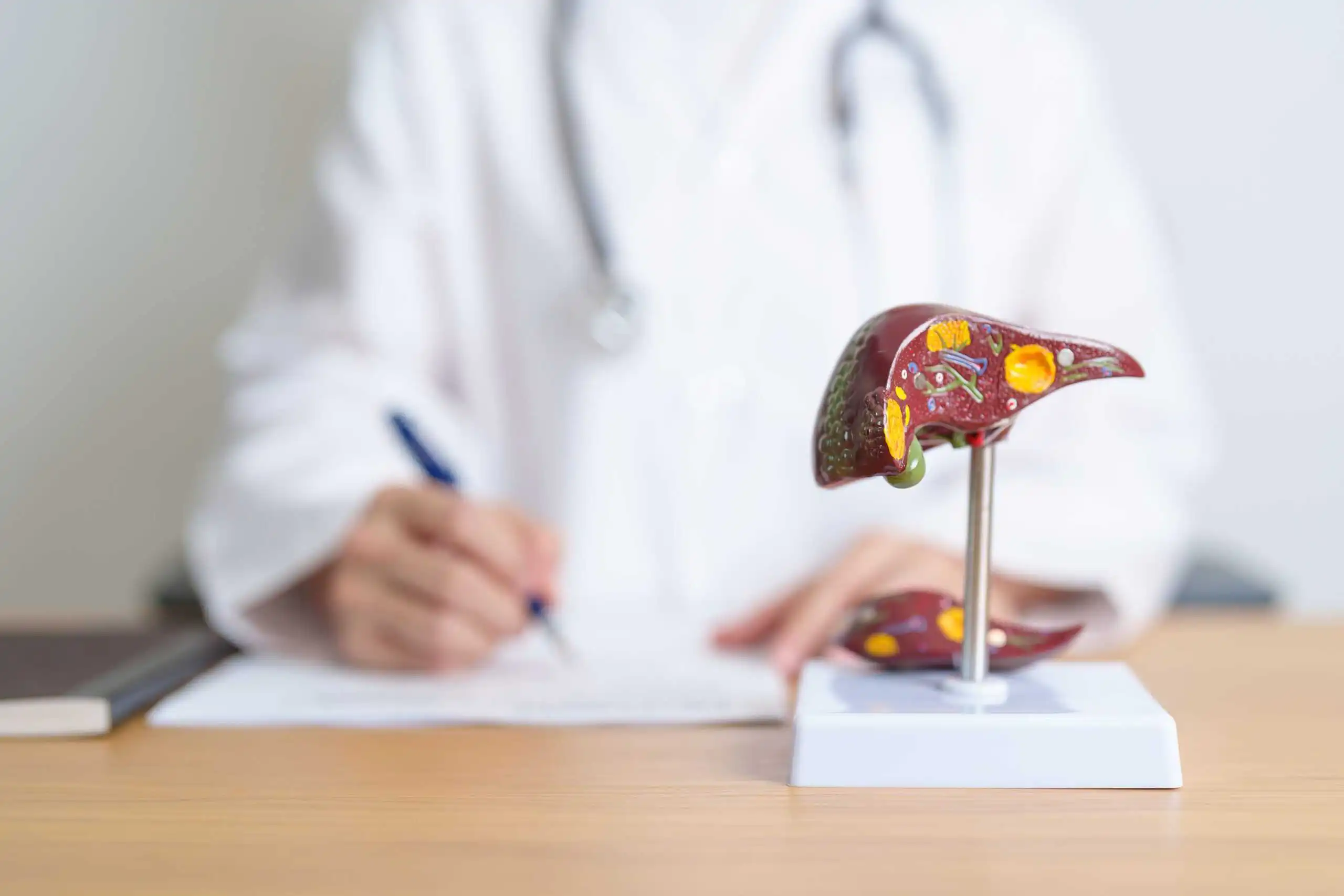
Located in the upper abdomen, just under your right ribs and beneath your right lung, lies the largest organ in your body: the liver. The liver is responsible for many vital functions throughout the body, including:
- Breaking down and storing nutrients absorbed by the intestines
- Delivering bile into the intestines to help the body break down and absorb nutrients
- Breaking down alcohol, drugs, and toxic wastes in the blood
- Creating most of the factors that allow your blood to clot when injured
Primary and Secondary Liver Cancer
Cancer in the liver develops when cells in the body begin to grow uncontrollably, resulting in a tumor. It is known as primary liver cancer, as it starts in the liver. Secondary liver cancer, on the other hand, is the result of cancer from another part of your body spreading to your liver. In this blog, we will focus on primary liver cancer.
There are three types of liver cancer: Hepatocellular carcinoma (HCC), Intrahepatic cancer (IHC), and Hepatic angiosarcoma.
HCC is the most common form of liver cancer and may begin as a tumor that progressively grows larger, or as small cancer nodules throughout the liver.
IHC accounts for approximately 10 to 20% of liver cancers. Starting in the cells that line the small bile ducts, this type of cancer is called intrahepatic cholangiocarcinoma, or bile duct cancer.
The final type, hepatic angiosarcoma, is a very rare form of primary liver cancer that accounts for roughly 1% of all cases. This type begins in the lining of blood cells in your liver.
Risk Factors and Symptoms: Can You Protect Yourself from a Liver Cancer Prognosis?
The early stages of liver cancer often pass by without notice, making it all the more difficult to catch early on. As the cancer continues to grow, symptoms may begin to appear. The three types of liver cancer tend to produce similar symptoms, including:
- Abdominal discomfort
- Swollen abdomen
- A hard lump on the right side
- Pain near the right shoulder blade or in the back
- Jaundice
- Easy bruising or bleeding
- Nausea
- Vomiting
- Loss of appetite
- Unexplained weight loss
- Unusual fatigue
Although it may go unnoticed in the early stages, recognizing your level of risk can help determine whether further action, such as a full-body MRI scan, would be a positive strategy for prevention and early detection.
Liver Cancer Risk Factors
Having a risk factor, or even many, does not always mean the chances of developing liver cancer are imminent. However, being aware of what could increase your chances provides you with the power and knowledge to decide how you move forward.
Risk factors of liver cancer may include the following:
- Chronic Hepatitis B or Hepatitis C
- Heavy alcohol use
- Tobacco use
- Obesity or being overweight
- Type 2 diabetes
- Foods that contain aflatoxin (a fungus that grows on improperly stored foods)
- Nonalcoholic fatty liver disease
If any of these apply to you, talk to your doctor. Depending on your risk, you may belong in a formal surveillance programme, which is covered in the next section.
If You Are High Risk, There Is a Real Surveillance Programme
This is the most important section on this page, and most articles about liver cancer leave it out.
Liver cancer is unusual in that there is a genuine, guideline-backed surveillance programme for people at high risk. The American Association for the Study of Liver Diseases recommends that all adults with cirrhosis, from any cause, have surveillance using abdominal ultrasound together with a blood test for alpha-fetoprotein, approximately every six months. Some people with chronic hepatitis B who do not have cirrhosis are also candidates, depending on their individual risk.
If you have cirrhosis, chronic hepatitis B or C, or advanced fatty liver disease, ask your doctor or a hepatologist whether you should be enrolled. Twice-yearly ultrasound with AFP is the recommended test, and a whole-body screening MRI does not replace it.
Prevention is also more actionable here than for most cancers. Hepatitis B is vaccine-preventable, hepatitis C is curable with modern antiviral treatment, and both are found with a simple blood test that many adults have never had. Reducing alcohol and addressing fatty liver disease matter too.
Is Liver Cancer Curable?
It is treatable, and outcomes depend heavily on stage at diagnosis, the type of cancer, whether it has spread, and your liver function and overall health. Caught early, options include surgical resection, ablation and transplantation. That is precisely why surveillance in high-risk groups exists.
Where a Whole-Body Scan Fits
Our scan includes the liver and can detect a lesion, signs of scarring, or obvious fatty change. What it cannot do is characterise what a lesion is. Telling a benign haemangioma apart from a cancer depends on watching how it takes up and releases contrast dye across several imaging phases, which a non-contrast screening scan does not perform. If we see something, the next step is a dedicated contrast-enhanced liver MRI or CT ordered by your physician.
And to be unambiguous: if you already have cirrhosis or chronic hepatitis, our scan is not your surveillance programme. Twice-yearly ultrasound with AFP is, and you should be enrolled in one.
If you are not in a high-risk group and want a broad structural look, schedule a scan or talk to our team first.
This article is for general education and is not medical advice.
Frequently asked questions
Who needs liver cancer surveillance?
The American Association for the Study of Liver Diseases recommends that all adults with cirrhosis, from any cause, have surveillance using abdominal ultrasound together with a blood test for alpha-fetoprotein, approximately every six months. Some people with chronic hepatitis B without cirrhosis are also candidates depending on individual risk. If you have cirrhosis, chronic hepatitis B or C, or advanced fatty liver disease, ask your doctor or hepatologist whether you should be enrolled.
What are the risk factors for liver cancer?
Chronic hepatitis B or C infection, heavy alcohol use, obesity, type 2 diabetes, nonalcoholic fatty liver disease, tobacco use, and exposure to aflatoxin from improperly stored foods. Cirrhosis from any of these causes is the strongest single risk factor. Having risk factors does not mean liver cancer is inevitable, but it does determine whether you should be in a surveillance programme.
What are the symptoms of liver cancer?
Early liver cancer usually causes no symptoms, which is why surveillance in high-risk groups matters. Later symptoms can include abdominal discomfort or swelling, a hard lump on the right side, pain near the right shoulder blade, jaundice, easy bruising or bleeding, nausea, loss of appetite, unexplained weight loss and unusual fatigue.
Can a whole-body MRI detect liver cancer?
It can detect a liver lesion, signs of scarring, or obvious fatty change. What it cannot do is characterise a lesion, meaning tell a benign haemangioma from a cancer, because that depends on watching how it takes up and releases contrast dye across several phases. A non-contrast screening scan does not do that. If something is seen, the next step is a dedicated contrast-enhanced liver MRI or CT.
Can liver cancer be prevented?
To a meaningful extent, yes, more so than most cancers. Hepatitis B is vaccine-preventable and hepatitis C is curable with modern antiviral treatment, and both are detected with a simple blood test many adults have never had. Reducing alcohol intake, maintaining a healthy weight and addressing fatty liver disease all lower risk.
Sources
- Key Statistics About Liver Cancer — American Cancer Society
- Global cancer burden growing, amidst mounting need for services — World Health Organization / IARC, 2024
- AASLD Practice Guidance on prevention, diagnosis, and treatment of hepatocellular carcinoma — Hepatology, 2023
- ACR Liver Imaging Reporting & Data System (LI-RADS) — American College of Radiology
- October is Liver Cancer Awareness Month — American Association for Cancer Research