Full-body scans have moved from curiosity to genuine trend, and the question we hear most is a fair one: why get a whole body MRI at all, if you feel fine?
Here is an honest answer, including the parts that do not flatter us.
The Gap in Routine Screening
Only about 14 percent of cancers diagnosed in the United States are found because the patient had a recommended screening test. Most are found another way, after symptoms appear or during care for something unrelated. The 57 percent of diagnosed cancers that have no recommended screening test at all account for roughly 70 percent of cancer deaths.
Four cancers carry a recommended screening programme for the general population: breast, cervical, colorectal and lung. For the rest, including ovarian, liver, kidney and pancreatic cancer, there is no recommended screening test for people at average risk. Surveillance programmes do exist for defined high-risk groups, such as regular liver imaging for people with cirrhosis or pancreatic surveillance for certain inherited syndromes. If you fall into one of those groups, that surveillance is what your doctor will recommend, and a screening scan is not a substitute for it.
What a Whole-Body MRI Actually Covers
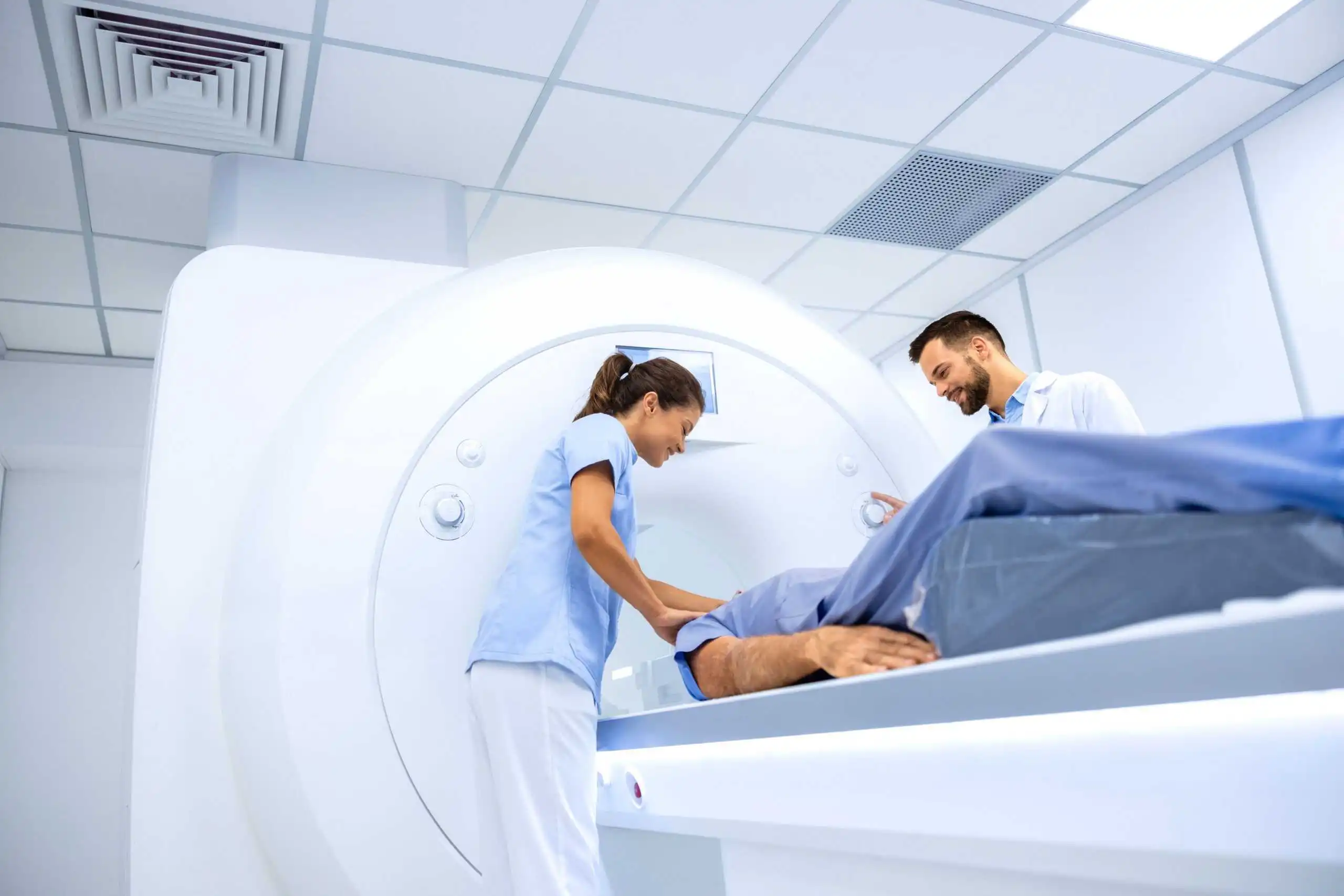
A traditional MRI images one targeted area. A whole-body scan surveys the brain, neck, chest, abdomen, spine and pelvis in a single session, screening for roughly 500 conditions across 13 organ systems. Because we include the neck, the thyroid is in the field of view, which not every provider covers.
It uses a magnetic field and radio waves rather than ionizing radiation, and our scans use no contrast dye. That matters most for elective imaging you might want to repeat over the years, because there is no cumulative radiation dose to weigh. The whole thing takes under an hour.
It can show abnormalities in organs with no routine screening test, including the ovaries, pancreas, liver and kidneys. It can find an aortic aneurysm, a brain tumour, or a kidney lesion nobody was looking for.
What We Are Not Going to Claim
This is where most marketing overreaches, so we will be direct.
There is no evidence that whole-body MRI finds ovarian or pancreatic cancer early enough to change outcomes in people with no symptoms and no risk factors. The U.S. Preventive Services Task Force actively recommends against screening for both in average-risk adults, because screening has not been shown to reduce deaths and false positives lead to unnecessary procedures. Anyone selling you early detection of silent cancer killers is making a claim the evidence does not carry.
The American College of Radiology does not currently recommend screening total body MRI for people with no symptoms, risk factors or suggestive family history, and notes it produces non-specific findings that lead to unnecessary follow-up. We would rather you heard that from us than found it later.
A scan cannot diagnose Alzheimer’s disease. MRI can show brain volume loss, and doctors use it to support an assessment or rule out other causes of memory change, but the diagnosis is clinical and uses cognitive testing and specific biomarkers. Age-related brain changes are common and usually not a sign of dementia. Likewise, small spots of white matter change are common and usually benign. They are not a diagnosis of multiple sclerosis, which requires a neurologist, a dedicated MS protocol and sometimes spinal fluid testing.
So Why Get a Whole Body MRI?
Because for some people the trade-off is worth it, made with open eyes.
You get a structural baseline of your own body while you are well, which makes any future change easier to interpret. You get coverage of organs your routine care does not screen. You get it without radiation. And you occasionally get something genuinely important found early.
Against that: scans of healthy people turn up findings that need follow-up and frequently amount to nothing, and that follow-up may sit with your own physician at your own cost. We cover that properly in what incidental findings actually are and in whether a full-body MRI is worth it.
It is an elective, informed choice rather than a guideline-endorsed screening test. Plenty of people make it anyway, and that is legitimate, as long as it is informed.
Decide With the Full Picture
If your routine screening is up to date and you want a broader structural look, schedule your scan or talk to our team first. If you have symptoms, start with your doctor instead.
This article is for general education and is not medical advice.
Frequently asked questions
Why get a whole body MRI if I feel fine?
The honest case is coverage and baseline. Only about 14 percent of cancers in the US are found through a recommended screening test, and the majority of diagnosed cancers have no screening programme for average-risk people. A whole-body scan surveys organs your routine care does not check, without radiation, and gives you a structural record to compare future scans against. The honest counterweight is that it is not a guideline-endorsed screening test and it produces findings that need follow-up and often amount to nothing.
Does a whole body MRI detect cancers that have no screening test?
It images the organs, which is not the same as detecting cancer early enough to change outcomes. There is no evidence that whole-body MRI improves survival for ovarian or pancreatic cancer in people without symptoms or risk factors, and the U.S. Preventive Services Task Force recommends against screening for both in average-risk adults. We will not claim otherwise.
Do radiologists recommend whole body MRI screening?
Not as a general recommendation. The American College of Radiology states there is not sufficient evidence to recommend total body screening for people with no symptoms, risk factors or suggestive family history, and notes it identifies numerous non-specific findings leading to unnecessary follow-up. We think you should know that before booking. Many people still choose it as an elective decision, which is legitimate as long as it is informed.
Can a whole body MRI detect early Alzheimer’s or multiple sclerosis?
No. MRI can show brain volume loss and white matter changes, and both are common with age. Alzheimer’s is a clinical diagnosis using cognitive testing and specific biomarkers, with MRI used to support the assessment or rule out other causes. Multiple sclerosis requires a neurologist, a dedicated MS protocol and sometimes spinal fluid testing. A screening scan can flag something worth investigating; it cannot diagnose either condition.
Is a whole body MRI safe?
There is no ionizing radiation and our scans use no contrast dye, so there is no radiation exposure to weigh, which matters most for elective imaging you may repeat over the years. The main safety consideration is metal: some implants and devices are not MRI-safe, so tell us about anything implanted before your appointment. The other honest consideration is the follow-up burden that incidental findings can create.
Sources
- ACR Statement on Screening Total Body MRI — American College of Radiology, 2023
- Ovarian Cancer: Screening — U.S. Preventive Services Task Force, 2018
- Pancreatic Cancer: Screening — U.S. Preventive Services Task Force, 2019
- How Is Alzheimer's Disease Diagnosed? — National Institute on Aging (NIH)
- New Research Highlights Just One In Seven Diagnosed Cancers Found By A Recommended Screening Test — NORC at the University of Chicago, 2022