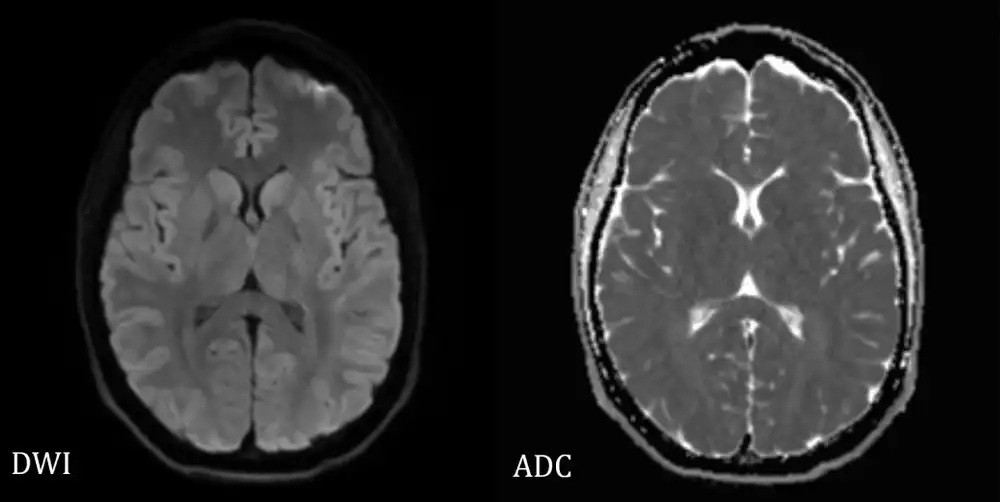
Diffusion Weighted Imaging (DWI) is one of the most advanced MRI techniques used in modern preventive imaging. It allows radiologists to evaluate how water molecules move within your body’s tissues, revealing abnormalities at the cellular level—often before structural changes can be seen. At MRI Wellness, DWI is a foundational component of every scan because it enables earlier, more accurate detection of disease.
What is Diffusion Weighted Imaging (DWI)?
Most imaging tests show what the body looks like. DWI shows how the body is functioning at a microscopic level.
This technique measures the movement of water molecules within tissues. In healthy tissue, water moves relatively freely. In abnormal tissue—especially where cells are densely packed—this movement becomes restricted. These subtle differences allow radiologists to identify areas of concern that may not yet be visible through traditional imaging.
In practical terms, DWI provides insight into how tissues behave, not just how they appear.
Why DWI Matters for Early Detection
Many serious conditions, including cancer, begin with changes at the cellular level. Long before a tumor becomes large enough to be seen structurally, it alters how cells are organized—and how water moves between them.
DWI is particularly effective in identifying these early changes. Tumors often restrict water movement due to their high cellular density, and they may also create surrounding inflammation or tissue disruption. These patterns can be detected on DWI scans, helping radiologists flag abnormalities much earlier in their development. Not all findings that are hard are cancer, but all cancers are hard.
This is a critical shift in healthcare. Instead of waiting for symptoms or advanced disease, DWI supports a more proactive approach—identifying potential issues when intervention may be more effective.
Why MRI Wellness Builds Around DWI
Not all MRI scans are designed the same way. Many traditional MRIs focus on a specific area of the body and are used to evaluate known concerns. MRI Wellness takes a different approach by designing scans for early detection across the entire body.
DWI plays a central role in this approach. It is combined with other MRI sequences in what is known as a multiparametric scan, allowing radiologists to evaluate multiple tissue characteristics at once. This combination improves both sensitivity and accuracy, helping distinguish between benign findings and those that may require further attention.
Applying DWI across the whole body is technically complex and requires carefully optimized equipment and protocols. However, it provides a level of insight that is essential for comprehensive screening.
A More Complete Picture of Your Health
DWI is most powerful when used as part of a broader imaging strategy. By combining diffusion imaging with other MRI sequences, radiologists can assess not only structure, but also tissue composition and behavior.
This layered approach allows for earlier detection, better characterization of findings, and more informed follow-up recommendations. It also supports the creation of a baseline, making it easier to monitor changes in the body over time.
At MRI Wellness, this is the goal: to provide clarity before symptoms appear and give patients a more complete understanding of their health.
Frequently asked questions
What does DWI show that a regular MRI does not?
DWI shows how water moves within tissues, which helps identify abnormalities at the cellular level rather than just structural changes.
Is DWI only used for cancer detection?
No. While it is highly effective for detecting tumors, DWI is also used for evaluating neurological conditions, inflammation, and other tissue abnormalities.
Why isn’t DWI used in every MRI?
DWI is technically demanding and requires specialized protocols. Many imaging centers limit its use to specific areas rather than applying it across the whole body.
Does DWI replace other MRI techniques?
No. It is most effective when combined with other MRI sequences as part of a multiparametric approach.
How does DWI support preventive healthcare?
By detecting cellular changes early, DWI can identify potential issues before symptoms develop, allowing for earlier intervention or monitoring.
Sources
- Attariwala, R., & Picker, W. (2013). Whole body MRI: Improved lesion detection and characterization with diffusion-weighted techniques. Journal of Magnetic Resonance Imaging, 38(2), 253–268. https://pubmed.ncbi.nlm.nih.gov/23960006/
- Petralia, G., et al. (2021). ONCO-RADS: Guidelines for whole-body MRI cancer screening. Radiology, 299(3), 494–507. https://pubs.rsna.org/doi/full/10.1148/radiol.2021201740
- Chodakiewitz, Y., et al. (2025). The Hercules Study: Whole-body MRI for multi-cancer detection. Journal of Clinical Oncology. https://ascopubs.org/doi/10.1200/JCO.2025.43.16_suppl.TPS10626