When it comes to your health, early detection could mean the difference between living and surviving.
A full-body scan offers a powerful, non-invasive way to find out what’s happening inside your body and identify potential health concerns before symptoms even appear.
From spotting hidden cancers to uncovering cardiovascular issues and neurological conditions, this advanced imaging technology provides valuable insights into your health that an annual check-up may miss.
So what can a full body MRI detect? More than most people expect, and less than some marketing suggests. Below we walk through the conditions a whole-body scan can reveal across each region of the body, where it adds the most value, and where its limits sit.
What is a Whole-Body Scan? Uncovering the History
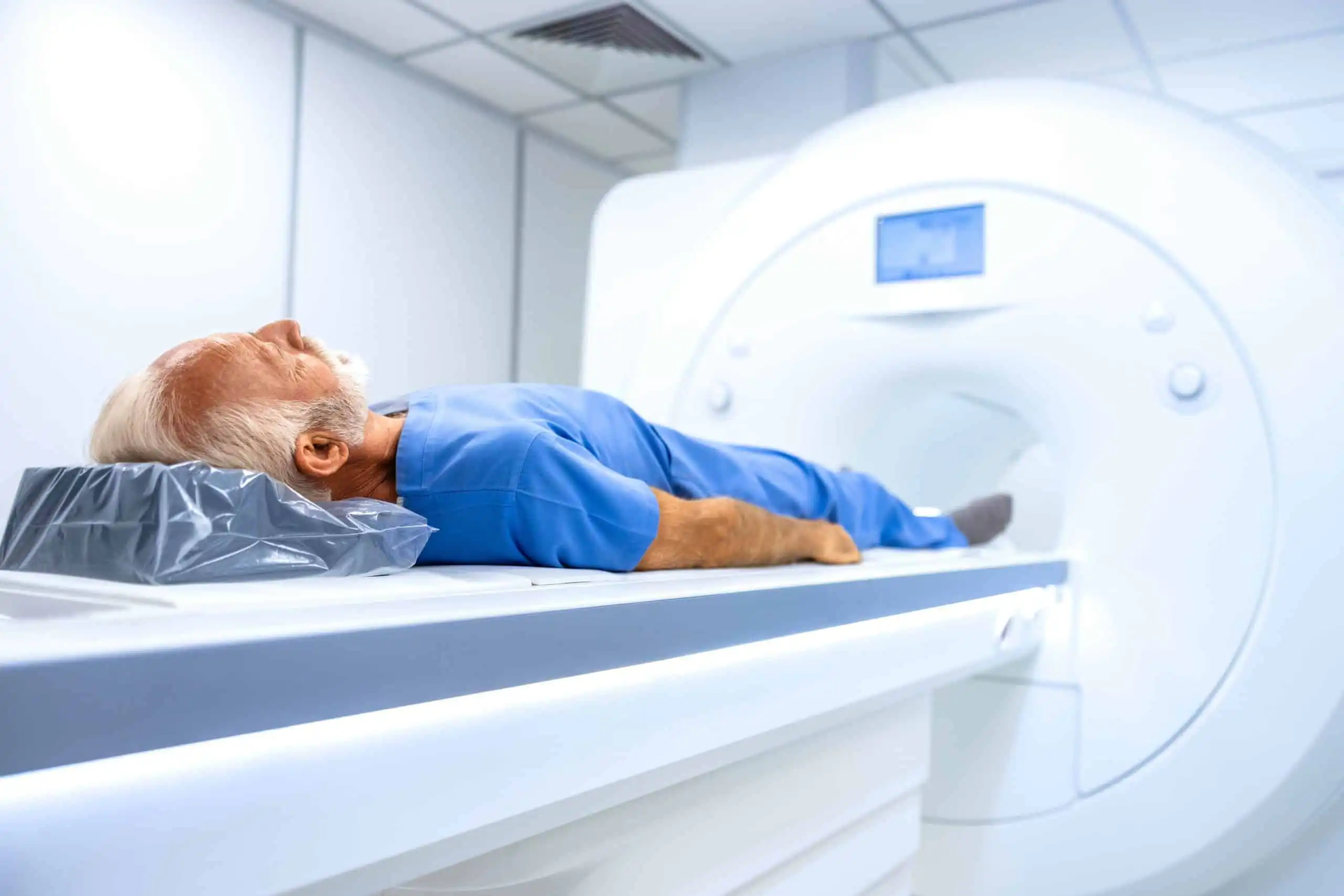
A whole body MRI scan, as we know it today, is a non-invasive test that scans and produces detailed images of the body’s internal structure.
Utilizing a combination of radio waves and a powerful magnetic field, it creates images of your soft tissues, organs, bones, joints, and blood vessels that our board-certified radiologists examine to search for any abnormalities present in your body.
Despite its recent entrance into the world of healthcare and wellness, the technology itself dates back to the late 1960s.
The Arrival of MRI Technology
In the late 1960s, Dr. Raymond Damadian took the first step in the scientific method – he posed a question.
Could magnetic resonance be used to tell the difference between cancer and non-cancerous cells?
He found success by testing his hypothesis on rats. He discovered that different tissue emissions resulted in different response lengths – the longer the response signals, the more likely they were from cancerous tissue.
As Damadian refined his work, he published those results in Science in 1971 and filed the first patent for MRI technology in 1972, which was granted in 1974. The first human whole-body scan followed on July 3, 1977, on a prototype nicknamed “Indomitable” that needed close to five hours to produce a single image. The first commercially available MRI scanner arrived in 1980, and the FDA approved MRI for clinical use in 1984.
What Can a Full Body MRI Detect?
At MRI Wellness, our MRI scanner screens for nearly 500 health conditions across 13 organ systems. Broken down between the brain, neck, abdomen, chest, spine, kidney, and pelvis, here are some of the most common conditions we can detect with a whole body MRI scan:
Brain
- Alzheimer’s
- Stroke
- Tumor
- Multiple Sclerosis
- Abscess
Neck
- Lipoma
- Thyroid mass or nodule
- Thyroid cyst
- Enlarged lymph nodes
- Thyroid tumor
Abdomen
- Appendicitis
- Pancreatic cancer
- Liver tumor
- Gastric tumor and cancer
- Crohn’s disease
- Gallstones
- Enlarged spleen
Chest
- Breast cancer
- Lung metastasis
- Enlarged heart
- Aortic aneurysm
Spine
- Degenerative disk disease
- Spinal fracture
- Scoliosis
- Herniated or bulging disk
Kidney
- Horseshoe kidney
- Kidney cancer
- Bladder prolapse
- Polycystic kidney
Pelvis
- Endometriosis
- Ovarian cyst
- Ovarian cancer
- Myoma
What a Whole-Body MRI Does Not Show
Being clear about the limits matters as much as listing the strengths. A screening MRI does not replace colonoscopy, mammography, low-dose CT lung screening, or bloodwork, and it will not reliably pick up flat colon polyps, very small lung nodules, or most blood and metabolic disorders. It also surfaces findings that turn out to be harmless. Pooled research across roughly 27,600 asymptomatic adults put potentially serious incidental findings at about 3.9 percent, and only about one in five findings that were followed up proved serious. We walk through that trade-off in what incidental findings actually are and in our honest look at whether a full-body MRI is worth it.
Should You Get a Whole-Body Scan?
With a full-body MRI scan, our goal is to provide a proactive approach to healthcare, offering the option for individuals with a genetic predisposition to certain conditions or those who present a higher risk to have the best chance at early detection.
In addition to high-risk individuals with a family history of certain health conditions, you should consider scheduling a whole-body MRI if you meet one or more of the following criteria:
- You are overweight
- You are sedentary or live an inactive lifestyle
- You are over the age of 45
- You have high cholesterol, diabetes, or high blood pressure
Schedule Your First Full-Body MRI Scan at MRI Wellness Today
Full-body MRI scans allow you to take a proactive approach to your healthcare, rather than focusing on prevention strategies. By leveraging the latest in healthcare technology, we’ve created an MRI experience built on accuracy, speed, safety, and comfort.
Take the first steps towards a better future by scheduling your scan at MRI Wellness.
Frequently asked questions
What does a full-body MRI scan show?
A whole-body MRI produces detailed images of your soft tissues, organs, bones, joints and blood vessels from the head through the pelvis. At MRI Wellness that means the brain, neck, chest, abdomen, spine, kidneys and pelvis in a single session, screened for roughly 500 conditions across 13 organ systems. It is particularly good at soft tissue, which is why it can show things a physical exam and routine bloodwork will not.
What cancers can a full-body MRI detect?
A screening MRI can reveal masses and lesions in the brain, thyroid, liver, pancreas, kidneys, ovaries and prostate, among others, and it can show enlarged lymph nodes that warrant a closer look. What it cannot do is diagnose cancer on its own. An MRI shows that something is there and what it looks like; confirming what it is takes further testing, often a biopsy. It also does not replace colonoscopy, mammography or low-dose CT lung screening, each of which is better at catching the specific cancers it was designed for.
What can a whole-body MRI not detect?
It will not reliably find flat colon polyps, very small lung nodules, or most blood and metabolic disorders, and it does not measure heart rhythm or blood chemistry. It is a look at structure, not function. Used alongside your regular bloodwork and age-appropriate screening, it fills gaps those tests leave; used instead of them, it leaves gaps of its own.
How is a whole-body MRI different from a CT or PET scan?
MRI uses a magnetic field and radio waves rather than ionizing radiation, so a screening MRI does not add to your lifetime radiation dose the way repeated CT scans can. Our scans also use no contrast dye. CT is faster and better for bone detail and acute injury; PET is generally used to stage a cancer that is already known. For asymptomatic screening of soft tissue across the whole body, MRI is the modality that makes sense.
Who should consider a whole-body MRI scan?
It is worth considering if you have a family history or genetic predisposition to conditions such as cancer, aneurysm or kidney disease, or if you are over 45, carry excess weight, live a largely sedentary life, or manage high cholesterol, diabetes or high blood pressure. It is also reasonable if you simply want a structural baseline to measure future scans against. It is worth knowing going in that screening healthy people turns up incidental findings that need follow-up and often turn out to be nothing, so the decision is a personal one.
Sources
- Whole-body MRI for preventive health screening: A systematic review of the literature — Journal of Magnetic Resonance Imaging, 2019
- Potentially serious incidental findings on brain and body magnetic resonance imaging of apparently asymptomatic adults: systematic review and meta-analysis — The BMJ, 2018
- Magnetic Resonance Imaging (MRI) — National Institute of Biomedical Imaging and Bioengineering (NIH)
- Tumor Detection by Nuclear Magnetic Resonance — Science, 1971
- Cancer Screening Overview (PDQ) - Patient Version — National Cancer Institute