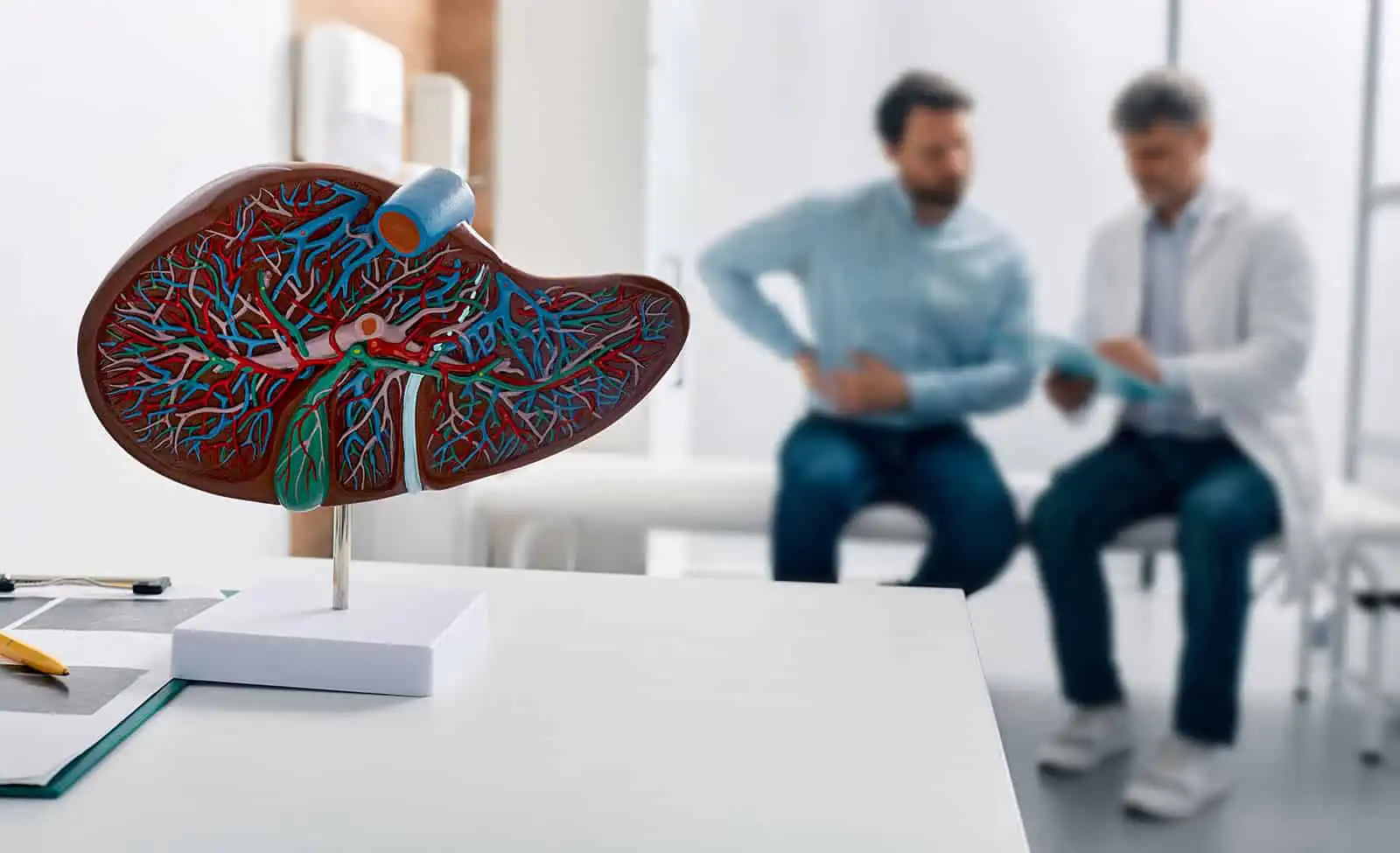
What is the Liver?
The liver is both an essential organ and a gland, performing hundreds of various functions throughout the body, and is responsible for producing proteins and hormones for other parts of the body.
What Does the Liver Do For Your Body?
While the liver is responsible for hundreds of different functions that allow you to move through your daily routine with ease, one of the liver’s biggest roles is cleaning your blood.
The American Liver Foundation describes it as filtering more than a litre of blood every minute, around 22 gallons an hour, all day and every day.
Other vital functions of the liver include:
- Ridding the body of old red blood cells
- Producing bile to help the body break down food
- Storing glycogen and other vitamins for the body to use later
- Regulate blood clotting
- Fight infections
- Produce proteins for blood plasma, cholesterol, and other proteins to help carry fat through the body
- Removes bilirubin from red blood cells
What Can an MRI of the Liver Show? A Closer Look at Liver Conditions
While we can feel our lungs and heart hard at work, our liver works under the radar. Because of its silent work ethic, we often don’t think about our liver unless a problem arises.
A whole-body MRI can pick up a liver lesion you would otherwise have no reason to look for. Because it uses no radiation and no injected contrast, it is well suited to that first look: spotting something, measuring it and recording where it is. Some findings can be settled on the scan itself, since a simple cyst has a characteristic appearance our radiologists recognise with confidence. Others cannot. Telling a harmless growth apart from one that needs treatment usually depends on watching how it takes up intravenous contrast across successive phases of a dedicated liver MRI, which is a different, targeted exam. When your scan shows something needing that next step, our report says so plainly. Because advanced liver disease raises pressure in the portal vein, the same scan often shows an enlarged spleen downstream, which can be the first clue that the liver needs a closer look.
MRI is also sensitive to fat within the liver and can show when the liver appears fatty, a finding worth raising with your physician, since fatty liver disease is common and often silent. Formal measurement of how much fat is present uses a specialised MRI technique, and your physician can refer you for it if a finding warrants a closer look.
One important distinction. Imaging and blood work answer different questions about your liver. An MRI shows structure: size and shape, whether there is a lesion, whether fat has built up. It does not measure how well the organ is working. That is what liver blood tests are for. ALT and AST rise when liver cells are injured and leak enzymes into the bloodstream, while albumin and clotting times reflect what the liver is still able to manufacture. They are complements, not substitutes. A normal scan does not guarantee normal liver chemistry, and normal blood work does not rule out a structural finding.
When Do You Need an MRI of the Liver?
Liver diseases often go unnoticed, with symptoms not arising until advanced stages of the disease have set in. One of the most common signs of a problem with your liver is jaundice or yellowing of the skin.
Jaundice occurs when there is a buildup of bilirubin in the bloodstream. Bilirubin is the byproduct the liver gets rid of when it breaks down red blood cells. Typically yellow in pigment, high levels of bilirubin indicate that the liver is having issues processing it into bile to be removed from the body.
Other symptoms that indicate a problem with your liver may include:
- Easy bruising
- Itchy skin
- Low blood pressure
- Abdominal pain
- Swelling in the legs or ankles
- Uncontrollable shaking
- Weakness
- Fatigue
- Confusion or loss of orientation
Set Your Sights on Peace of Mind with MRI Wellness
The liver is the star student in class, silently performing more than 500 vital functions easily. From converting your food to energy to removing harmful substances from your body, the liver is an essential part of keeping you and your body on the move.
If you have symptoms suggesting a liver problem, particularly jaundice, start with your doctor and blood work rather than a screening scan. If you want a broad structural look while you are well, a whole-body MRI can give you that, and a baseline to measure future scans against.
Located in Charleston, SC, our innovative MRI system at MRI Wellness delivers a comprehensive report, assessing your risk of disease and focusing on early detection efforts, allowing you to take a proactive approach to your health.
Dedicate your time to your overall health and wellness by scheduling an appointment with us today!
Frequently asked questions
What does the liver do?
More than almost any other organ. The American Liver Foundation credits it with over 500 distinct vital functions, most running quietly in the background. Its biggest single job is filtration, described as more than a litre of blood every minute. It also produces bile to break down food, stores glycogen and vitamins, regulates blood clotting, makes proteins for blood plasma, helps fight infection, clears old red blood cells and removes bilirubin.
What can an MRI show about the liver?
Structure. It can detect a lesion, measure it and record where it is, and it is sensitive to fat within the liver. What it generally cannot do without contrast is characterise a lesion, meaning tell a haemangioma from an adenoma from something malignant. That depends on watching how a lesion takes up intravenous contrast across successive phases of a dedicated liver MRI, which is a different exam.
Can a scan tell me if my liver is working properly?
No. Imaging shows structure; blood tests measure function. ALT and AST rise when liver cells are injured and leak enzymes into the bloodstream, alkaline phosphatase and GGT point to bile duct problems, and albumin and clotting times reflect what the liver can still manufacture. A normal scan does not guarantee normal liver chemistry, and normal blood work does not rule out a structural finding.
What are the warning signs of liver problems?
The best known is jaundice, a yellowing of the skin or eyes caused by bilirubin building up in the bloodstream. Others include easy bruising, itchy skin, abdominal pain, swelling in the legs or ankles, dark urine, persistent fatigue and weakness, and confusion or disorientation. Liver disease often causes no symptoms until an advanced stage, which is why blood tests matter.
Should I get a scan for my liver?
If you have symptoms, particularly jaundice, start with your doctor and blood work rather than a screening scan. If you are well and want a broad structural look, a whole-body MRI can provide that and a baseline for future comparison. Bear in mind that scans of healthy people frequently show liver cysts and other findings that turn out to be harmless.
Sources
- Understanding Your Liver: Location, Function, and Complexity — American Liver Foundation
- ACR Liver Imaging Reporting & Data System (LI-RADS) — American College of Radiology
- Alanine Transaminase (ALT) Blood Test: What It Is, Procedure & Results — Cleveland Clinic
- Proton density fat fraction for diagnosis of metabolic dysfunction-associated steatotic liver disease — PubMed, 2025
- Magnetic Resonance Imaging (MRI) of the Body — RadiologyInfo.org (RSNA/ACR)