We like to believe we are invincible to health scares and various conditions, but a visit to the doctor’s office can remind us just how fragile we – and our health – are.
Oftentimes, a visit to the doctor is accompanied by symptoms we can’t quite explain or feelings we may not be ready to voice aloud. But what if we had a means of shifting our perspective from known treatment methods to preventative strategies and practices?
So what is a whole body MRI, what can it actually find, and where does it fall short? Here is a straight answer to all three.
Keep reading as we help you understand the latest preventative healthcare technology and how MRI Wellness in Charleston, SC can help you take a proactive approach to your health.
What is a Whole Body MRI?
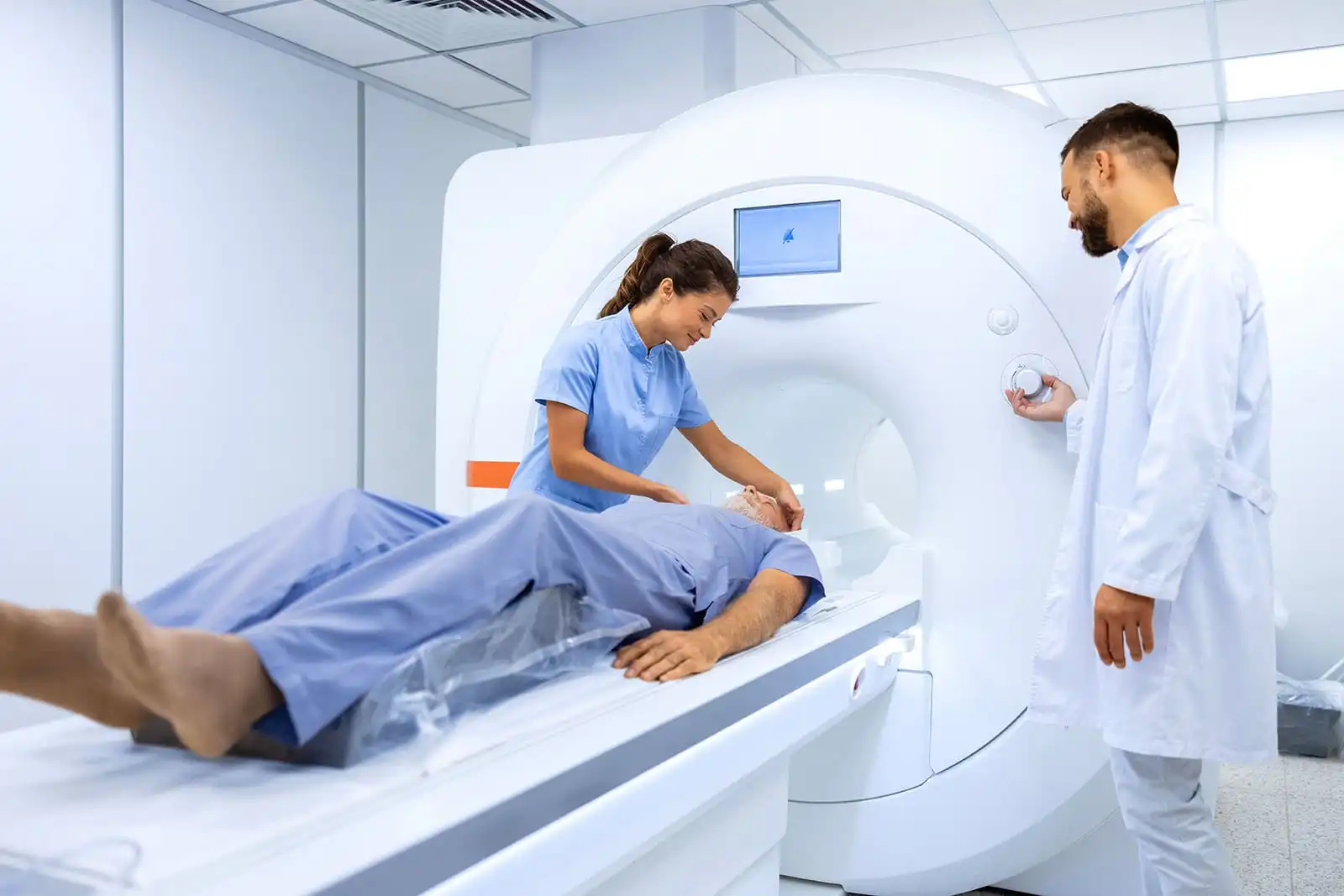
A whole-body MRI scan, also known as a full-body MRI scan, is a painless, noninvasive procedure that uses an imaging test to provide detailed information on every system and organ in the body.
The imaging test, called a magnetic resonance imaging (MRI) scan, uses a combination of radio waves and a powerful magnetic field to create 3D images of your body, from soft tissues to organs to blood vessels.
With whole-body imaging, our team will be able to provide you with a comprehensive insight into what’s going on inside your body.
Is a Whole-Body MRI Scan Safe?
Have you ever experienced a broken bone or needed a closer look at a specific organ? If so, you’ve likely undergone a CT scan, X-ray, or PET scan. These types of imaging tests, also known as targeted scans, often expose you to certain doses of radiation in the process.
Some imaging tests, including X-rays, CT and nuclear medicine scans, use ionizing radiation. MRI does not. It builds its images from a strong magnetic field and radio waves instead.
That does not make CT a bad test. CT is fast, widely available and better than MRI for several things, including kidney stones, lung nodules and acute injuries, and it is the standard of care in many situations. The dose from a single CT is small: a typical chest CT delivers around 6 mSv, roughly two years of the natural background radiation everyone receives, and the National Cancer Institute notes that when a CT is medically indicated its benefits greatly outweigh the small potential risk. Where MRI having no radiation matters most is elective, repeated imaging, which is exactly the wellness screening context.
MRI Wellness scans are free from harmful ionizing radiation and contrast dyes commonly used in X-rays, CT, or PET scans. This means you can confidently schedule your first full-body scan, knowing your safety is our priority.
What is an MRI Scan Used to Diagnose?
A full-body MRI screening allows us to focus on various parts of the body instead of just one centralized organ or area.
From your head down to your toes, our MRI screening technology can help detect a number of conditions, from aneurysms to spinal problems.
A whole body MRI looks broadly across many organs at once. That breadth is both its strength and its limit: it can reveal things a targeted test would never look for, and it can also miss things a dedicated test is designed to find. It complements your regular screening rather than replacing it. Here is what it may help detect, broken down by body part:
Brain
- Aneurysms
- Benign and cancerous tumors
- Changes in the small blood vessels of the brain and in overall brain volume. These are visible on MRI and become more common with age. They are not a diagnosis in themselves, and imaging alone cannot diagnose dementia or Alzheimer’s disease, which are clinical diagnoses
- Multiple sclerosis
- Fluid buildup in the brain (Hydrocephalus)
Neck
- Salivary gland tumors or cysts
- Thyroid tumors or cysts
- Thyroid cancer
- Enlarged lymph nodes
- Throat cancer
Spine
- Multiple sclerosis
- Syrinx
- Spinal tumors or cancer
- Degenerative disc disease
- Narrowing of the spinal canal (Stenosis)
- Bulging or herniated disc
- Abnormalities in the bone marrow, which MRI is particularly sensitive to and which can occasionally be the first sign of a marrow disorder or a cancer that has spread to bone
Chest
- Lung cancer or tumors
- Fluid in the lung cavity
- Aortic aneurysm
- Breast tumors or cysts
- Enlarged lymph nodes
Abdomen
- Liver cirrhosis
- Pancreatic tumors, cysts, or cancer
- Enlarged spleen
- Kidney tumors
- Kidney enlargement or shrinkage
- Abdominal aortic aneurysms
- Adrenal gland tumors
- Diverticulitis
Pelvis
- Uterine fibroids
- Endometriosis
- Prostate cancer
- Hip arthritis
- Enlarged prostate
For those with a family history of certain cancers or other health conditions, a full body scan at MRI Wellness may be the answer in early detection and preventative care.
What a Whole Body MRI Will Not Do
Being clear about this matters more to us than a booking.
It is not a substitute for colonoscopy. Colon cancer screening relies on tests that examine the bowel lining directly or detect blood and DNA markers in stool. A whole body MRI does not prepare or expand the bowel, so it cannot reliably show polyps or early colon cancers. If you are 45 or older, keep to the standard colorectal screening schedule with your primary care provider regardless of what a scan shows.
It is not a reliable test for stones. Kidney and gallbladder stones contain very little water, so they produce almost no MRI signal and are easily missed. A scan may show indirect signs such as a swollen kidney or a dilated bile duct, but CT and ultrasound remain the right tests when stones are suspected.
It does not replace mammography, low-dose CT lung screening, or your bloodwork. It shows structure, not function, so it will not measure hormone levels, blood chemistry or heart rhythm.
And it is not endorsed as population screening. The American College of Radiology holds that there is not sufficient evidence to recommend total body screening for people with no symptoms, risk factors or suggestive family history. We think you should know that before you book. Plenty of people still choose it as an elective, informed decision, and that is a legitimate choice, but it should be an informed one.
What Happens If We Find Something
Scans of healthy people turn things up. Across 32 studies and nearly 27,700 asymptomatic adults, roughly 3.9 percent had a potentially serious incidental finding, and a larger share had indeterminate ones needing follow-up. Many findings are minor and common: thickening in the sinus lining, small cysts, wear-and-tear joint changes. Your radiologist report separates those from findings that matter.
Follow-up testing may sit with your own physician and may carry its own cost. We would rather you weighed that in advance than discovered it afterwards. We go into it properly in what incidental findings actually are and whether a full-body MRI is worth it.
Ready to Schedule Your Scan? Here’s What Happens Next
Our goal at MRI Wellness, first and foremost, is to give you peace of mind when it comes to your health, and that starts with transparency.
Schedule Your Scan
At MRI Wellness, you have the option to choose between three different scans: a whole-body scan, a brain and spine scan, or a torso scan.
The whole-body scan will provide detailed imaging from head to toe, covering the major organs including the brain, spine, heart, lungs, and more, and will last between 60 and 75 minutes.
The brain and spine scan will last 60 minutes, and provide detailed imagery of the spinal cord, vertebrae, discs, and surrounding soft tissue.
The final imaging test, the torso-only scan, will capture detailed images of the chest, pelvis, and abdomen, along with surrounding tissues.
The cost of an MRI scan at MRI Wellness ranges from $950 to $2,200.
Visiting Our Clinic
Today’s the day for your scan! Are you feeling prepared? If not, don’t worry – we are here to help!
After you get checked in with our team, we will ask that you remove all metallic objects so as not to interfere with the MRI scan magnets. Objects you will need to remove may include:
- Wallet
- Belt
- Watch
- Phone
- Jewelry
- Glasses
- Dentures
- Wigs
To make the experience as peaceful for you as possible, we will give you a set of comfortable clothes to wear, ensuring you’ll be able to relax while the MRI technology works its magic.
In as little as an hour, you’ll be well on your way to receiving results!
Time for the Results
Once your results are ready, one of our specialists will review them with you, explaining any findings and addressing any concerns you may have.
Take a Proactive Approach to Your Health with the Help of MRI Wellness
Personal health empowerment starts with preventative action.
At MRI Wellness, we leverage technology to identify early, highly treatable diseases before they become a larger point of concern. While we often take a “wait-and-see” approach to our healthcare, we believe it’s time for peace of mind and positive outcomes – and that begins with early detection.
Take a step closer to healthcare confidence with MRI Wellness. Contact us and schedule your scan today!
Frequently asked questions
What is a whole body MRI?
It is a painless, non-invasive imaging exam that uses a strong magnetic field and radio waves, rather than ionizing radiation, to produce detailed images of your organs, soft tissues and blood vessels from head to pelvis. At MRI Wellness it covers 13 organ systems and screens for roughly 500 conditions in a single session, with no contrast dye.
How long does a whole body MRI take?
Our whole-body scan runs 60 to 75 minutes. The brain and spine scan takes about 60 minutes, and the torso-only scan covering chest, abdomen and pelvis is shorter. You will be asked to remove metal objects beforehand, including your wallet, belt, watch, phone, jewelry, glasses, dentures and any hairpieces, and we provide comfortable clothing to change into.
How much does a whole body MRI cost?
Our scans range from $950 to $2,200 depending on which you choose: the brain and spine scan, the torso scan, or the full whole-body scan. Screening scans are generally not covered by insurance, though HSA and FSA funds can often be used.
Is a whole body MRI safe?
MRI uses no ionizing radiation, and our scans use no contrast dye, so there is no radiation exposure to weigh. The main safety consideration is metal: some implants, pacemakers and devices are not MRI-safe, so tell us about any implanted device before your appointment and we will check its safety rating. The other honest consideration is not physical but practical, in that screening healthy people produces incidental findings that need follow-up and often turn out to be nothing.
Does a whole body MRI replace my other screenings?
No. It does not replace colonoscopy, mammography, low-dose CT lung screening, or your routine bloodwork, and it is not a reliable test for kidney or gallbladder stones. It shows structure, not function. The American College of Radiology holds there is not sufficient evidence to recommend total body screening for people without symptoms or risk factors, so treat it as an elective addition to standard care rather than a replacement for it.
Sources
- ACR Statement on Screening Total Body MRI — American College of Radiology, 2023
- Magnetic Resonance Imaging (MRI) — National Institute of Biomedical Imaging and Bioengineering (NIH)
- Computed Tomography (CT) Scans and Cancer Fact Sheet — National Cancer Institute
- Potentially serious incidental findings on brain and body magnetic resonance imaging of apparently asymptomatic adults: systematic review and meta-analysis — The BMJ, 2018
- Colorectal Cancer: Screening — U.S. Preventive Services Task Force, 2021